English
OUR COMMITMENT
Forest Division
PRODUCTS
Return
In case of fire in our forests and surroundings, call 41 2109-3855 [PR] | 41 2109-3856 [PR] | 49 3245-9015 [SC] | 49 3245-9186 [SC]
Forest Division
We are the wood brand, that's why our raw material is so important to us and why we take responsible care of our forests. All of our wood comes from planted forests, preserving native forests and ensuring employment and income in the countryside for thousands of families. The forest management practices adopted in our forests ensure the rational use of natural resources for the scale and long-term production of the raw material that supplies our factories.
We reap what we sow
We plant over 9 million trees a year. Our planted forests are important from an economic and social point of view and bring benefits to the environment. Our forest areas consist of plantations and natural areas that contribute to the conservation of ecosystems, fundamental to life on the planet. In addition, we work on mapping the communities affected by forest management operations so that we can adopt resolutions for interference, further contributing to the generation of a value chain.
We cultivate to reap,
We preserve to always reap!
174
thousand hectares
Pinus Forest Cultivation
88
thousand hectares
Effectively Planted Forests
86
thousand hectares
Preservation of Natural Forests and Infrastructure
9
million per year
Planted Trees

5
states
PR, SC, RS, MT and SP
60
counties
Supply Chain

Forest Management
The main objective of BERNECK® forest management is to produce high quality wood. Planning and conducting the development of production areas through the use of management techniques consistent with the characteristics of each region is fundamental to the success of our results. This, it is possible to guarantee the sustainability of the business and the productivity of the forest in the short, medium and long term. We are certified in Forest Management and Chain of Custody by the PEFC - Programme for the Endorsement of Forest Certification and FSC® - Forest Stewardship Council®. More than 60% of our forest areas are certified and recognized at the highest levels of forest management by international certification. And with the Custody Chair certification, we guarantee traceability and legality in our panel and sawn production process. This ensures that our products come from forests managed in an environmentally responsible, socially beneficial and economically viable manner. Currently, there are 174 thousand hectares destined to the forest cultivation of Pinus in Paraná, Santa Catarina, Rio Grande do Sul and São Paulo. Of this total, 87 thousand hectares consist of areas of legal reserve, permanent preservation and other fragments of native vegetation and infrastructure. From Teca, there are 6,000 hectares of land dedicated to its cultivation in Mato Grosso, half of which is destined for preservation.
+
250
Wild Animal Species
6
Monitored Farms
*Data from the Fauna Monitoring Program consolidated in 2021.
Preservation of biodiversity
Biodiversity studies are important tools for maintaining responsible forest management. Our BERNECK® Annual Fauna Monitoring Program analyzes the aspects of evolution, recovery of degraded areas, environmental impact, distribution and composition of local biodiversity. Mosaic planting, protection of watercourses, prevention of forest fires and the rational use of natural resources contribute – and greatly contribute – to the sustainability of the environment. This forest management helps in the establishment of ecological corridors, which favor the circulation of more than 250 species of wild animals, collaborating with the conservation of biodiversity.
Other studies in natural areas and high conservation value help to monitor the management of planted forests and understand how the relationship between operations and the environment occurs.
Forest Production
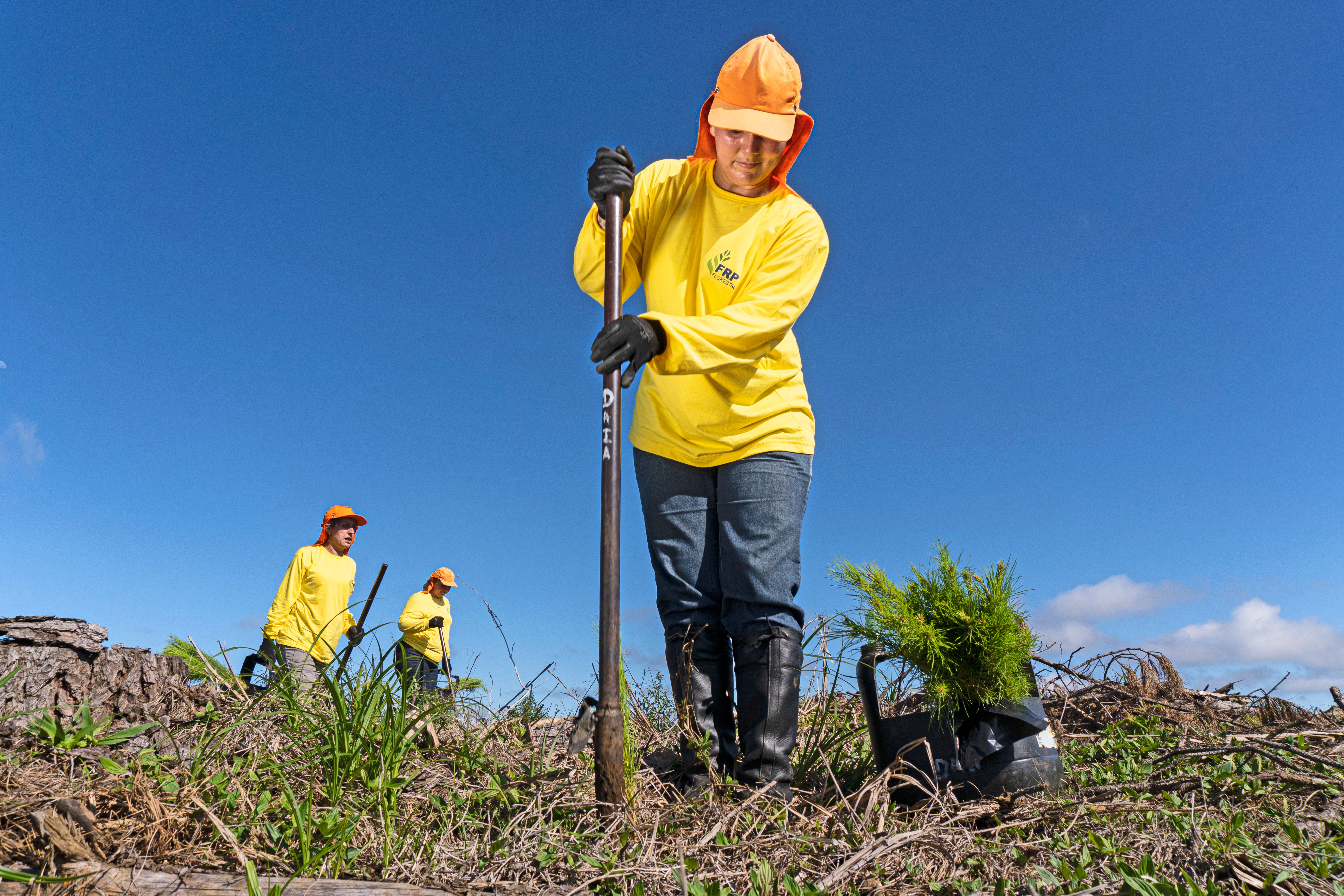
The seeds are planted manually and germination occurs between 20 and 30 days, but it is only after a stay of approximately 6 months in the nursery that the seedlings are able to be planted. For planting, we manage the soil using minimum tillage, that is, without using fire or fertilizers. By doing so, it is possible to maintain the fertility, structure, and moisture of the soils and greatly reduce negative interference in our own areas and the surrounding areas.
The same happens in the harvesting system, in which respect for local relief is an important factor that guides decision making, as well as the intensity of mechanization and the correct use of technologies. We adopt a harvesting system, which considers the topography of the terrain, the volume of the forest and the end use of wood in the industry to ensure a high productivity in our forest operations, with the lowest impact on the soils and the greatest ease in handling the wood. The Forest Harvest covers the stages of felling, dragging and clearing, in plantations between 16 and 18 years old.
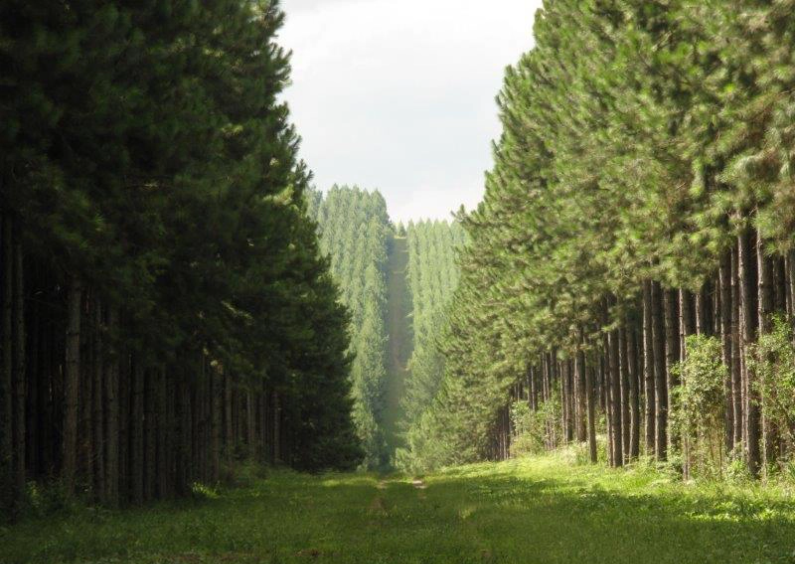
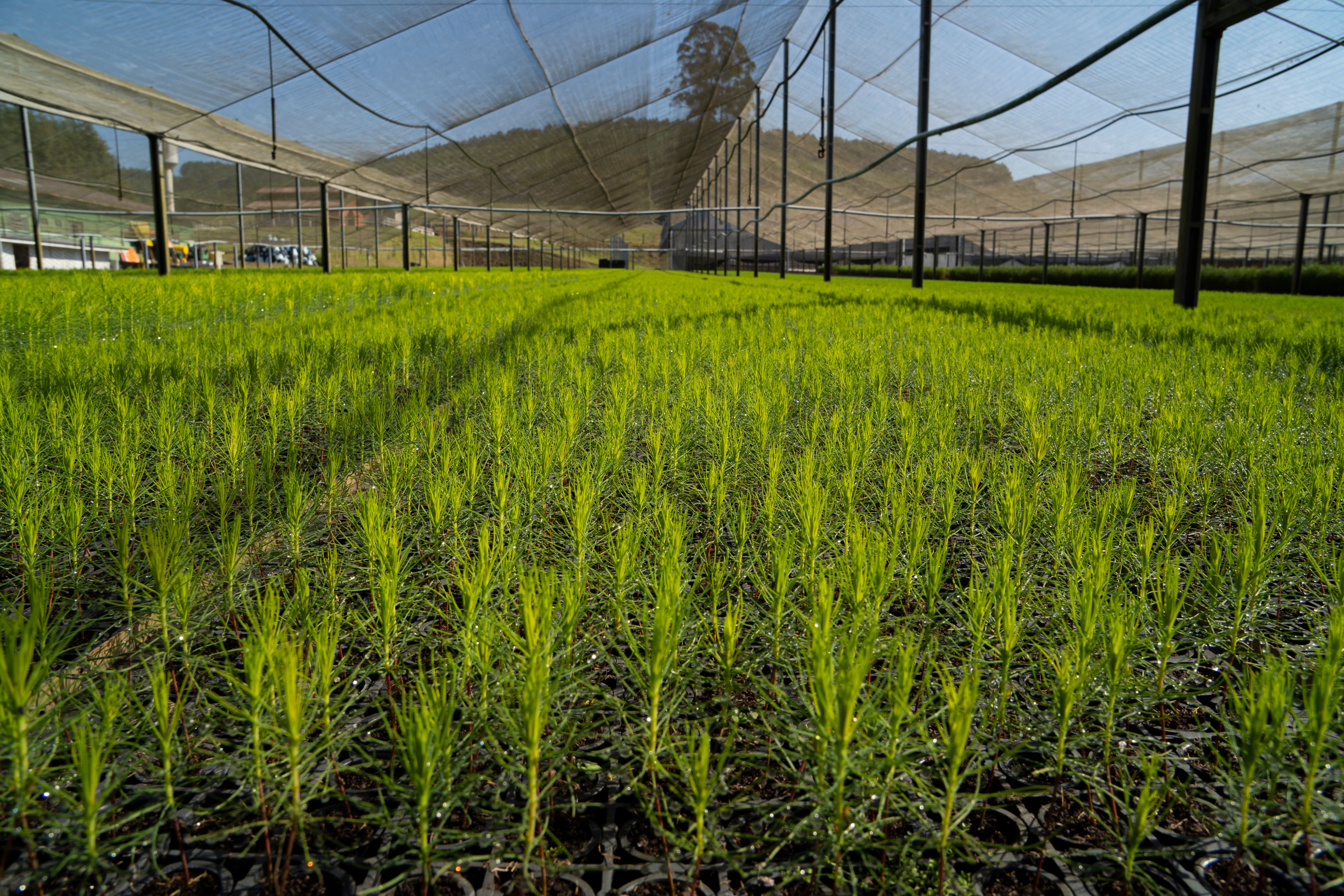
From planting to harvesting
The seeds are planted manually and germinate in 20 to 30 days, but only after approximately 6 months in the nursery are the seedlings ready to be planted. The planting operation is carried out without fire, avoiding negative impact on surrounding areas and contributing to the maintenance of soil moisture and fertility.
Highlights of forest production

Forest Monitoring System

Forests near the Industrial Units

Forest Planning and Inventory

Innovative Harvesting Equipment and Technology

Integrated Forestry Logistics

Research applied to the improvement of Forest Quality
Forest Supplier
To act in balance with the environment, BERNECK® uses round wood and wood chips with quality assurance. Therefore, we work in partnership with selected producers, supporting the development of their activities. It is a great business opportunity for the rural family, as it provides an alternative of income, valuation of property, work and improvement of the quality of life with the production of wood.
Rural producers who plant pine and eucalyptus within a radius of 300 km away from our factories can become our partners in forest. Please contact our Forest department and request an assessment.
Public Summary of Forest Management
Learn more about the responsible management of our forests.
Public Summary of Forest Management
Ⓒ2022 BERNECK. All rights reserved.
Terms of Use and Privacy Policy
